
December has a way of arriving all at once. The calendar fills up, the year blurs into a few big moments, and January shows up before there’s time to think about what actually happened. Year-end reflection questions give that thinking a shape. Below are 60 original questions in seven groups, from wins and hard moments to money, health, letting go and the year ahead, plus a simple routine for one evening and a version for teams at work.
Year-end reflection questions are prompts that help you look back on the past twelve months and decide what to carry into the next. Answer them in writing, in one sitting or over a week. Start with what happened, then what you learned, then what you want next. Five honest answers are worth more than sixty rushed ones.
Looking back: wins, lessons and hard moments
Start here. Before you can plan anything, you need a clear picture of the year you just had, and memory tends to keep only the loudest parts. Open your calendar, your photos or your notes app and scroll month by month for ten minutes. Then answer these end of year reflection questions.
Wins
- What am I proudest of this year, big or small?
- What did I finish that I’d been putting off?
- When did I surprise myself?
- What’s one moment from this year I want to remember in ten years?
- What went better than I expected?
- What did I do this year that last year’s version of me couldn’t have done?
Lessons
- What did I learn about myself this year?
- What’s a mistake I made that taught me something useful?
- What advice would I give myself on January 1 of this year?
- Which decision am I most glad I made?
- What did I change my mind about?
Hard moments
- What was the hardest part of this year?
- How did I get through it, and who or what helped?
- What feeling showed up most often this year?
- What did I avoid that still needs my attention?
- What would I like to forgive myself for?
The hard questions are the ones most lists skip, and they’re often where the useful answers live. If question 14 stalls you, the emotion wheel can help you find a more precise word than “stressed” or “fine.” Naming a feeling clearly makes it easier to see what was behind it.
People and relationships
A year is mostly made of people. These self reflection questions for the end of the year help you see who shaped your year and where you want to put your time next.
- Who did I spend the most time with this year?
- Who made my life better, and do they know it?
- Which relationship grew stronger?
- Which relationship took more than it gave?
- Who did I lose touch with that I’d like to reconnect with?
- When did I feel most understood?
- How was I as a friend, partner, parent or coworker this year?
- Who do I want to see more of next year?
Question 18 has a simple follow-up: send a short message to one person on your list. It takes two minutes and is often the part of a year-end review people remember best.
Work and money
Work and money year-end reflection questions are easy to skip because the answers can feel uncomfortable. They’re also the ones that most change how next year goes.
- What part of my work gave me the most energy?
- What part drained me?
- What new skill did I build this year?
- Did my work this year match what I care about?
- Where did most of my money go?
- Which purchase or expense am I happiest about?
- Which spending would I like to change?
- What’s one money habit I want to keep next year?
For question 29, a quick look at your bank and card statements beats guessing. A quick scan is enough: notice the three or four biggest categories and whether they match what you value.
Health and habits
These end of year reflection questions look at energy, sleep, movement and the small routines that hold a week together.
- When did I feel most rested this year?
- What habit helped me most?
- What habit am I ready to change?
- How did I treat my body this year?
- What did I do just for fun?
- What gave me energy, and what took it away?
- How did I handle stress this year?
- What does a good ordinary day look like for me?
Keep these answers kind and practical. The goal is to notice patterns, like “I sleep better when I walk after dinner,” not to judge yourself. If stress or low mood got heavy this year, talking with a licensed mental health professional is a good step, and in the US you can call or text 988 any time to reach the 988 Suicide & Crisis Lifeline.
Letting go
Letting go is the bridge between looking back and looking ahead. These questions to ask yourself make room for what comes next.
- What am I still carrying from this year that I’m ready to put down?
- Which goal no longer fits who I am now?
- What commitment can I step back from?
- What story about myself do I want to stop telling?
- What do I need to say, or write, to close a chapter?
- What am I grateful for, even in the hard parts?
Writing your answers down helps here. A practice called Three Good Things asks you to write about three things that went well and why they happened, about 10 minutes a day for at least a week. The Greater Good Science Center’s guide to Three Good Things notes that in Seligman’s 2005 study, people who tried it reported more happiness, with follow-ups at one week and at one, three and six months. Question 46 borrows that habit of naming the good and its cause.
Looking ahead: word of the year and intentions
Now turn the page. These year-end reflection questions use everything above to set a direction for next year, without a long list of resolutions.
- What do I want next year to feel like, in three words?
- What one word could guide my choices next year?
- What do I want more of, and less of?
- What’s one thing I’d regret not trying next year?
- Which two or three areas of my life deserve the most attention?
- What small daily habit would support those areas?
- What might get in the way, and how will I handle it?
- What would I like to write in next year’s reflection?
A word of the year works because it’s short enough to remember in the moment. “Steady” or “brave” or “rest” gives you a quick test for a choice: does this fit my word? Intentions work best when they’re specific. “Walk after dinner three times a week” is easier to keep than “be healthier.”
How to do a year-end review in one evening
One evening is enough. This routine fits into about two hours, with tea and a notebook.
- Gather (15 minutes). Scroll through your calendar, photos and notes month by month. Jot down a one-line highlight for each month.
- Look back (40 minutes). Answer six to eight year-end reflection questions from the wins, lessons and hard moments groups. Write in full sentences, even short ones.
- Pick two life areas (30 minutes). Choose the two groups that matter most this year, like people and work, and answer three questions from each.
- Let go (10 minutes). Answer questions 41 and 46. Some people like to tear out and recycle the first one.
- Look ahead (20 minutes). Choose a word for next year and write two or three specific intentions.
- Close (5 minutes). Put a reminder in your calendar for one year from now to reread what you wrote.
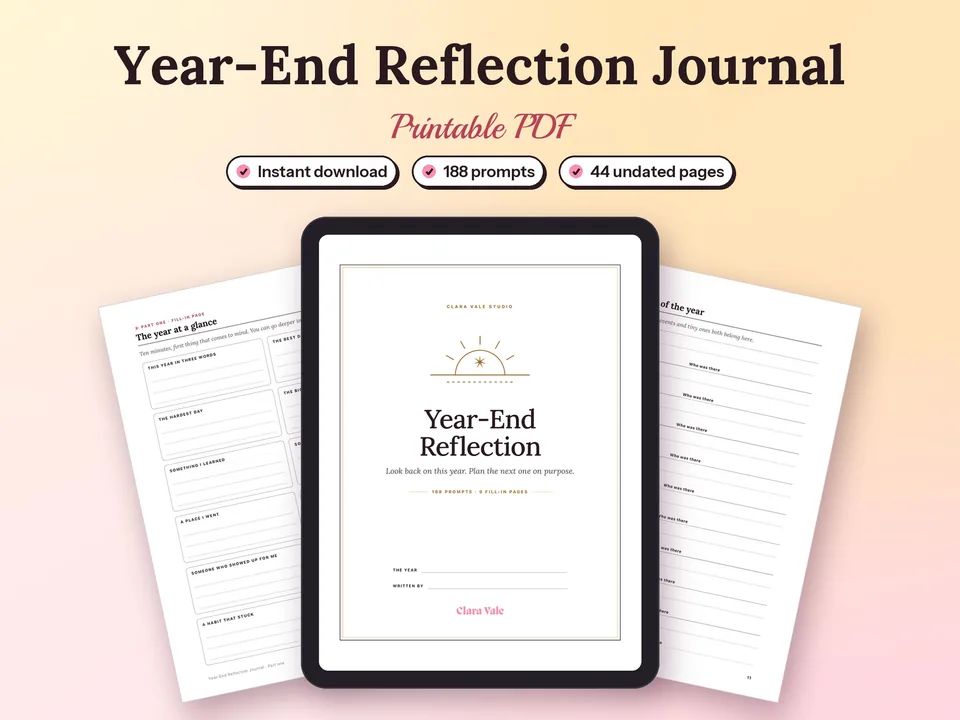
If you’d like more structure, our Year-End Reflection Journal is a 44-page undated printable with 188 numbered prompts: 126 to look back, season by season, and 62 to plan the next year, plus fill-in pages for your top 10 moments, a word of the year and a quarter-by-quarter plan. Because it’s undated, you can print a fresh copy every December and compare your answers. If you journal on a phone or laptop instead, 3 Pages Daily gives each day its own private pages, so next December the whole year is already there to scroll back through.
Year-end reflection questions for teams at work
The same idea works for a team. A short year-end retrospective helps people see what they built together and what to change before January planning starts. Collect answers in writing first so quieter voices get heard, then talk them through in a 45-minute meeting.
- What are we proudest of as a team this year?
- What took longer or cost more than it should have?
- What should we stop doing next year?
- What helped us most when things got busy?
- Who on the team helped in ways that went unseen?
- What one change would make next year easier for everyone?
Keep the tone forward-looking. The point is to learn from the year, so thank people by name for question 59 and turn the answers to questions 57 and 60 into two or three concrete changes with an owner each.
Make your year-end reflection a yearly habit
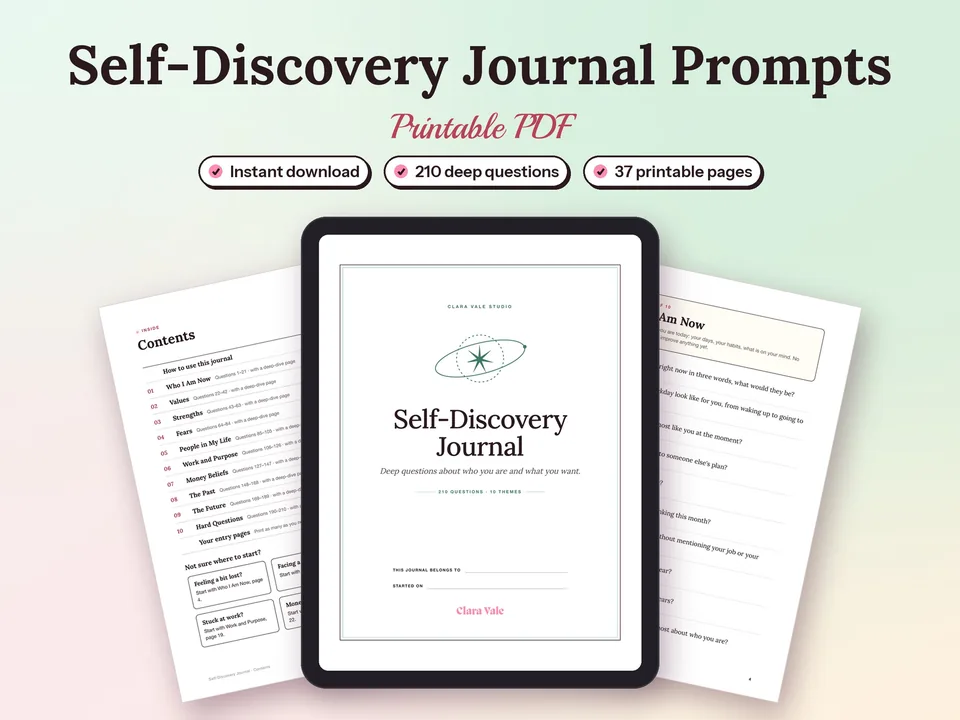
The most useful year-end reflection questions are the ones you actually answer. Pick the groups that fit your year, give yourself one quiet evening, and write your answers somewhere you can find them twelve months from now. If you’d like prompts for the rest of the year too, our 120 journal prompts cover daily check-ins, gratitude and self-discovery, and the Self-Discovery Journal Prompts add 210 deeper questions about values, fears and the future.
Questions people ask
How do you do a year-end reflection?
Set aside one quiet evening. Skim your calendar and photos to remember what happened, then answer a handful of year-end reflection questions in writing: a few about wins and lessons, one or two about people, money and health, one about what to let go of. Finish by choosing a word for next year and two or three intentions.
Which is an example of a reflective question?
A reflective question asks you to look at your own experience and draw something from it. "What did I learn this year that I want to remember?" is a good example. Compare it with "Did I meet my goals?", which only takes a yes or no. Reflective questions usually start with what, when, how or why.
What are 10 good questions?
Ten good questions to ask yourself at the end of a year: What am I proudest of? What surprised me? What was hard? What did I learn? Who mattered most? Where did my money go? What gave me energy? What drained it? What am I ready to let go of? What do I want next year to feel like?
What are some good end-of-year reflection questions for kids?
Keep them short and concrete: What was the best day of your year? What's something new you learned to do? Who was a good friend to you? What was hard, and how did you get through it? What do you want to try next year? Kids often answer more freely when they draw or talk instead of write.
When should you do a year-end review?
Any time from early December to mid-January works. Many people like the quiet week between Christmas and New Year's Day. Your birthday is another good moment, since it marks your own year. Pick one evening, put it on the calendar and treat it like any other appointment you'd keep.
How do you choose a word of the year?
Read back over your answers about this year and notice what you want more of. Write down five to ten single words, like steady, brave, rest or rooted, then pick the one that still feels right a day later. A good word is short enough to remember and gives you a simple test for everyday choices.
What questions should I ask my team at the end of the year?
Ask about results, process and people: What are we proudest of this year? What took longer than it should have? What should we stop doing? Who helped the team in ways that went unseen? What one change would make next year easier? Collect answers in writing first, then discuss them together.