
Most people start the same way: a phone, a few products already in the bathroom cabinet, and no idea what a brand would pay for a 30-second video. Learning how to become a UGC creator is mostly learning to run a tiny freelance business. You make short videos that brands post on their own pages or run as ads, and you get paid for the video itself, not for your followers. Below are the eight steps, in order, from understanding what brands buy to handling taxes on the money.
This post is educational and is not financial, legal or tax advice. Rates and tax rules are current as of October 2026.
To become a UGC creator, learn what brands pay for, pick a niche, film three to five sample videos with products you own, and put them in a portfolio or media kit. Set a base rate from your time and hourly rate, add fees for usage rights, then pitch brands, sign a simple contract, and set money aside for taxes.
How to become a UGC creator: the 8 steps at a glance
Here’s the whole path on one screen. Each step has its own section below.
- Understand what brands buy. Short, natural videos they can post or turn into ads.
- Pick a niche. One or two product categories you can film well and often.
- Make portfolio samples. Three to five spec videos, no brand deal needed.
- Set up a portfolio and media kit. One link a brand can open in 30 seconds.
- Set your rates. A base rate from your time, plus add-ons for usage rights, whitelisting, raw footage and rush.
- Find and pitch brands. Marketplaces plus direct pitches.
- Use a contract and get paid. Deliverables, usage terms and payment dates in writing.
- Handle taxes on 1099 income. Track income, set money aside, pay self-employment tax.
You don’t need followers for any of these steps. You need samples, a clear price, and a habit of pitching.
Step 1: Understand what brands buy
UGC stands for user-generated content: photos and videos made by everyday people rather than a studio. In paid UGC work, a brand hires you to make that kind of content, then posts it on its own accounts, product pages or ads.
That last part changes everything. An influencer is paid for reach. A UGC creator is paid for a file. So brands judge you on things they can see in the video: a hook that stops the scroll in the first two or three seconds, clear product shots, good light and audio, and a delivery that sounds like a real customer.
The formats that come up again and again in briefs:
- Unboxing and first impressions
- Product demo or “how I use it”
- Testimonial or “3 reasons I switched”
- Before and after
- Problem and solution, where the product fixes a familiar annoyance
Because the brand often turns your video into an ad, it may ask for extra hooks (different openings for the same video) so it can test which one performs. Keep that in mind when you film samples and when you price.
Step 2: Pick a niche
A niche is the category of products you film. Beauty and skincare, food and kitchen, home and cleaning, pets, fitness, baby and parenting, and apps or tech are common starting points.
Choose by three tests:
- You already own the products. That makes samples free to film.
- Your setting fits. A bright kitchen suits food gadgets. A bathroom counter suits skincare.
- Brands in that niche sell online. Small direct-to-consumer brands buy UGC often, because they run lots of social ads.
You can widen later. Starting narrow makes your portfolio look intentional, and it lets you reuse props, lighting and scripts. If you’re weighing UGC against other ways to earn from home, our list of side hustles for women compares it with options that need more upfront time or money.
Step 3: Make portfolio samples
The most useful part of how to become a UGC creator with no followers or brand experience is this: make spec videos. A spec video is one you film on your own, for a product you bought, to show what you’d make for a brand. You don’t need permission to show it in your portfolio as a sample.
Aim for three to five videos, each in a different format from Step 1. For each one:
- Write a short script. A hook line, two or three benefits, and a simple call to action.
- Film vertically in 9:16 near a window. Soft daylight is free and flattering.
- Record clean audio. Film in a quiet room. Soft furnishings cut echo.
- Edit tightly with captions. Free phone editors such as CapCut are enough to start.
- Keep it short. 15 to 45 seconds covers most ad placements.
The first sentence matters more than the camera. Viewers decide in the first few seconds whether to keep watching, and brands know it. A hook that names a problem (“My skin felt tight by noon, every day”) does more work than “Hi guys, today I’m reviewing…”. Film two or three hooks for each sample and keep the strongest.
Faceless UGC works too. Hands, voiceover, product close-ups and point-of-view shots are fine for many demo briefs.
Step 4: Set up a portfolio and media kit
A brand should be able to see your work in one click. That can be a free page on a link-in-bio tool, a shared Google Drive folder, a simple website, or a PDF.
Include:
- Your name, niche and one line about the content you make
- Your three to five best samples, with the format labeled (demo, unboxing, testimonial)
- What you offer: single videos, bundles, photo sets
- Contact details and your usual turnaround time
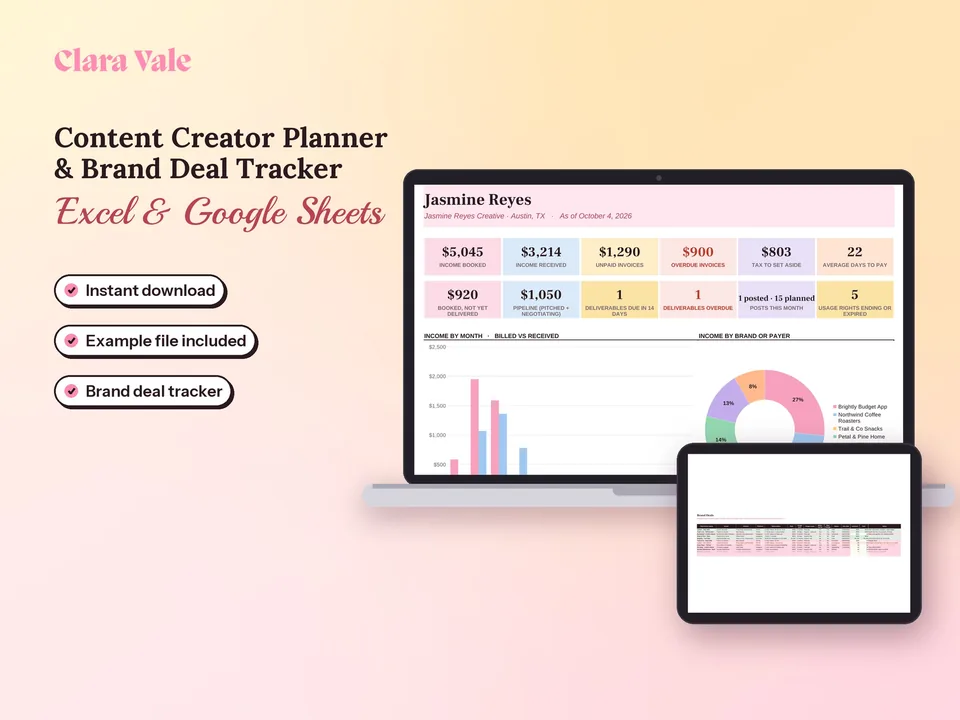
A media kit is the polished, one-page version of the same thing, often with a rate card attached. Once deals start coming in, our Content Creator Planner keeps your rates, brand deals, deliverables and invoices in one spreadsheet.
Step 5: Set your rates
This is where most beginners guess. A better way to handle UGC rates is to build your price from your own time, then add fees for what the brand will do with the video.
How much do UGC creators make?
There’s no official price list for UGC, and UGC pricing varies by niche, platform and usage. Two published reference points:
Billo’s UGC rates guide (June 2026) puts entry-level creators at about $50 to $100 per video, mid-level creators at $150 to $500, and established creators at $500 or more before licensing. Billo also notes that usage rights, allowlisting and paid media can double or triple the cost.
Collabstr’s 2025 Influencer Marketing Report, as reported by Net Influencer, found an average UGC asking price of $198.06 and an average amount actually paid of $177.68. Creators asked for roughly 11% more than they were paid.
So how much do UGC creators make in a month? That depends on how many deals you close, and nobody publishes a reliable average for it. Use these UGC rates to sanity-check your number, not to set it.
Build your base rate from time
List every task for one video. Your times will differ:
| Task | Time |
|---|---|
| Reading the brief, writing a script | 1 hour |
| Setting up and filming | 1.5 hours |
| Editing, captions and exporting | 1.5 hours |
| Emails, one revision and invoicing | 1 hour |
| Total | 5 hours |
Base rate = hours × hourly rate. At $40 an hour, 5 hours × $40 = $200 per video. That lands inside the published ranges above. If your number is far outside them, check your hours first.
Add-ons: usage rights, whitelisting, raw footage and rush
Add-ons are where UGC rates for beginners usually leave money on the table. Each one gives the brand more value from the same shoot:
- Usage rights spell out where and for how long the brand can use your video. Organic posting on the brand’s own page is usually in the base rate. Paid ads, longer periods (6 or 12 months) and extra platforms cost more. Always set an end date.
- Whitelisting, also called allowlisting, means the brand runs ads through your account so they show your handle. Meta calls these partnership ads. It uses your identity, so price it separately with a time limit.
- Raw footage is every unedited clip. It lets the brand cut many new ads from one shoot.
- Rush delivery covers a shorter turnaround than your usual one.
A simple UGC pricing method is to price each add-on as a percentage of your base. The percentages below are example numbers, not an industry standard:
| Item | Example pricing | Amount |
|---|---|---|
| Base video | 5 hours × $40 | $200 |
| Paid usage, 3 months | 30% of base | $60 |
| Raw footage | 25% of base | $50 |
| Rush delivery | 20% of base | $40 |
| Total quote | $350 |
When we built our UGC rate calculator, we kept each add-on as its own percentage line for this reason: the brand can see exactly what each extra costs, and you can drop one line without redoing the whole quote.
Step 6: Find and pitch brands
Samples and a price are only half of how to become a UGC creator. The other half is asking for work, and it helps to use two channels at once.
UGC marketplaces. Platforms such as Billo, Insense, JoinBrands and Collabstr list brand briefs that creators apply to. They’re a practical place to land your first paid videos and build reviews. The trade-off is competition and less control over price.
Direct pitches. Find brands that already run creator-style ads in your niche. The Meta Ad Library shows which brands are running ads right now. Then send a short email or DM:
- One line on who you are and your niche
- One specific idea for their product (“a 20-second before-and-after for your tinted SPF”)
- A link to your portfolio
- A clear next step (“Happy to send my rates”)
Keep a list of every brand you contact and follow up once after about a week. Pitching is a numbers game for beginners, and a simple log stops brands from slipping through the cracks.
Step 7: Use a contract and get paid
Before you film, get the key terms in writing. An email the brand replies “agreed” to is better than nothing, and a short contract is better still. Cover:
- Deliverables: number of videos, length, hooks, formats
- Revisions: how many rounds are included (one is common) and the cost of extra rounds
- Usage rights: where, how long, and whether paid ads or whitelisting are included
- Exclusivity: if the brand asks you to avoid competitors, list them and set a time limit, and charge for it
- Payment: amount, due date, and method; many creators ask for a deposit up front on new clients
Send an invoice the day you deliver, with the due date on it. The brand will usually ask for a Form W-9 before it pays you. Our Content Creator Planner & Brand Deal Tracker keeps each deal, deliverable, usage end date and invoice in one sheet and flags late payments, which matters once you have more than two or three brands at a time.
Step 8: Handle taxes on 1099 income
In the US, UGC income is self-employment income. Brands treat you as an independent contractor, not an employee, so nothing is withheld from your pay. Some brands will send a Form 1099-NEC at the start of the year, but the income counts whether or not you get one.
The IRS explains on its self-employment tax page that the self-employment tax rate is 15.3%, made up of 12.4% for Social Security and 2.9% for Medicare. You owe it, and file Schedule SE, once your net earnings from self-employment reach $400 for the year. Income tax is on top of that.
What that means in practice:
- Set money aside from every payment. A separate savings account makes it painless.
- Track business costs. Products you buy for a paid video, editing apps and lighting can reduce your net earnings. Keep receipts.
- Pay estimated taxes during the year with Form 1040-ES once you expect to owe enough tax, so a big bill doesn’t land in April.
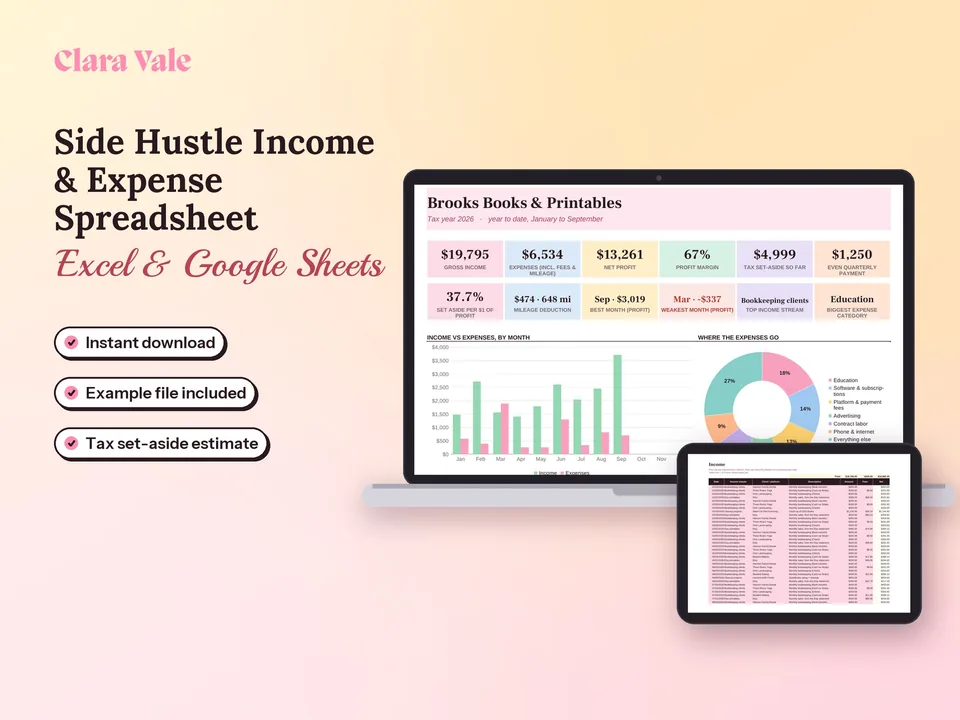
Our self-employed tax calculator estimates how much to set aside from your UGC income, including self-employment tax.
Start with one sample and one price
You don’t need followers or expensive gear to become a UGC creator. You need a niche, a handful of strong samples, a portfolio link, and a price you can explain. Film your first sample this week, work out your base rate, and send three pitches. Then raise your UGC rates as your portfolio grows. Our free UGC rate calculator turns your hours, hourly rate and add-ons into a package quote you can send to a brand today.
Questions people ask
How to start UGC with no followers?
Brands pay for the video, not your audience, so followers aren't required. Pick a niche, film three to five sample videos with products you already own, and put them in a simple portfolio. Then pitch small brands directly or apply on UGC marketplaces. Your samples do the selling, so make the first three seconds of each one strong.
How much money do UGC creators make?
It varies widely by experience, niche and usage rights. Billo's June 2026 rate guide puts entry-level creators at about $50 to $100 per video and mid-level creators at $150 to $500. Collabstr's 2025 report found an average UGC asking price of $198.06, with $177.68 actually paid. Monthly income depends on how many deals you close.
How much should I get paid for UGC?
Start from your own numbers. Multiply the hours one video really takes you by an hourly rate you're happy with, then add percentages for usage rights, paid ads or whitelisting, raw footage and rush delivery. Check the result against published beginner ranges, and raise your base rate as your portfolio and results grow.
What is the best UGC platform for beginners?
There isn't one best platform for everyone. Marketplaces such as Billo, Insense, JoinBrands and Collabstr post brand briefs that beginners can apply to, which helps you get your first paid videos. The trade-off is competition and less control over price. Many creators use a platform for early experience while pitching brands directly.
Can you do UGC faceless?
Yes. Faceless UGC uses your hands, a voiceover, product close-ups, screen recordings or point-of-view shots instead of your face. It works well for beauty application, kitchen gadgets, tech and apps. Some briefs ask for a person on camera, so faceless creators get fewer offers, but plenty of product demo work doesn't need a face.
Is becoming an UGC creator worth it?
It can be, if you treat it as a small freelance business. Startup costs are low because a phone and natural light are enough, and you don't need an audience. The hard parts are finding brands consistently, pricing usage rights, and chasing invoices. Most creators start part-time and keep it going once repeat clients appear.
How to start UGC with no experience?
Make your own experience first. Film spec videos for products you already use, in the formats brands buy most: unboxings, demos, testimonials and before-and-afters. Write a short script for each, edit with captions, and export in vertical 9:16. Three to five strong samples in one niche are enough to start pitching.