
UGC shows up all over the place: in the casual TikTok ad that looks like a friend’s video, in the reviews under a product, in job posts asking for a “UGC creator”, and in the brand reposts on Instagram. So what is UGC, exactly? It stands for user-generated content, and it has two meanings that get mixed together. One is content real customers post for free. The other is content brands pay creators to make in that same style. Knowing which one you’re looking at tells you who owns it, who gets paid, and what has to be disclosed.
This post is educational and is not legal or tax advice. Platform features and rates are current as of October 2026.
UGC (user-generated content) is any content about a brand made by people outside the brand rather than by the brand itself: reviews, photos, videos and posts. It comes in two kinds. Organic UGC is made by customers on their own. Paid UGC is made by hired UGC creators for the brand to post or run as ads.
What is UGC? The meaning of user-generated content
The core UGC meaning is content made by people outside the brand rather than by the brand itself. That’s the whole test. A polished studio shoot from the marketing team isn’t UGC. A shaky phone video of a customer opening the same box is.
The term started with platforms. Wikipedia, YouTube and review sites run on content their users create, and “user-generated content” described that. Marketing borrowed it for anything a customer posts about a product: a star rating, a tagged Instagram photo, a “get ready with me” video that happens to feature a lipstick.
Then a second meaning grew on top of the first. Brands noticed that customer-style videos often did better as ads than their own glossy ones. Waiting for customers to make them was slow, so brands started paying people to make them on purpose. Those people are UGC creators, and their videos are also called UGC, even though a brand commissioned them.
So the UGC meaning in social media today covers both. When a marketer says “we need more UGC”, they might mean reposting customers. When a creator says “I do UGC”, they mean paid work.
The two kinds of UGC: organic vs paid
Here’s how the two kinds compare side by side.
| Organic UGC | Paid (creator) UGC | |
|---|---|---|
| Who makes it | Customers and fans, unprompted | A UGC creator hired by the brand |
| Is anyone paid? | No (sometimes a discount or feature) | Yes, per video or per package |
| Who owns the copyright | The customer | The creator, unless the contract transfers it |
| Where it’s posted | The customer’s own account | Mostly the brand’s account and ads |
| What the brand needs | Permission to reuse it | A license (usage rights) in the contract |
| Disclosure | None, if truly unprompted | Required when the creator posts it as an endorsement |
The look is often identical. A vertical phone video, natural light, someone talking to camera. The difference is in the money and the paperwork behind it.
UGC examples you’ve probably already seen
What is UGC content in practice? These are the most common formats, organic or paid:
- Reviews and ratings. Star ratings and written reviews on a product page, often with customer photos.
- Unboxings. Opening the package on camera and reacting to what’s inside.
- Product demos. Showing the product doing its job: a blender crushing ice, a stain coming out.
- Testimonials. A person talking to camera about why they bought it and what changed.
- Before-and-afters. Skincare, cleaning products, home organizing.
- Tutorials and “how I use it”. Makeup application, recipe videos with a specific pan, app walkthroughs on screen.
- Hauls and try-ons. Several items at once, common in fashion.
- Tagged photos. A customer’s photo of a dress at a wedding that the brand reposts with credit.
The paid versions add structure. A creator might deliver the same testimonial with three different opening lines (“hooks”) so the brand can test which one keeps people watching in the first three seconds.
Why brands use UGC (and why they pay for it)
The short answer to “What does UGC do?” is that it shows a product the way a shopper will actually experience it. A real hand gives scale. A real bathroom gives context. A real voice answers the questions a product photo can’t, like whether a sweater is itchy or a bottle leaks.
There’s also a format reason. On TikTok, Reels and Stories, people scroll past anything that looks like a commercial. A phone-shot video of a person talking matches everything else in the feed, so it gets a few more seconds of attention. Those seconds are what an ad needs.
Brands pay creators rather than waiting for customers for three practical reasons. They can order the exact product, angle and message they need. They can get many versions quickly for testing. And they get the legal right to use it in ads, which a random customer post doesn’t come with.
What is a UGC creator, and how do UGC creators get paid?
A UGC creator is a freelancer who makes customer-style content for brands to use. They don’t need a big following, because the brand is buying the video, not the audience. Most of the work is short vertical video, plus some photos.
Pay usually works like this:
- A base fee per video. This covers scripting, filming, editing and a round of revisions. Many creators sell packages (for example, three videos) at a small discount.
- Add-ons for how the content is used. Usage rights, paid ads, whitelisting, raw footage and rush delivery are priced on top.
- Payment by invoice or through a platform. Direct deals are invoiced. Marketplaces such as Billo, Insense and Collabstr handle payment for briefs posted there.
For a sense of market prices, Billo’s UGC rates guide (June 2026) puts entry-level creators at about $50 to $100 per video, mid-level creators at $150 to $500, and established creators at $500 or more before licensing. Billo also notes that usage rights, allowlisting and paid media can easily double or triple the cost.
Here’s how the base-plus-add-ons model plays out. Say a video takes 2.5 hours from script to final edit and the target is $50 an hour. That’s $125 per video, or $375 for a three-video package. Add 30% for usage rights and the quote becomes $487.50, or $162.50 per video. When we built our UGC rate calculator, we set it up in exactly this order, because it keeps the creator’s time separate from the brand’s use of the content.
Usage rights and whitelisting explained
This is the part of UGC that confuses everyone at first, and it’s where most of the money is.
Usage rights are permission for the brand to use the content, and for how long and where. Why does a brand need permission for a video it paid for? Because of how copyright works. The U.S. Copyright Office’s Copyright Basics circular says copyright exists automatically from the moment an original work is fixed, and that owning a copy of a work doesn’t give you the copyright in it. A brand receiving a video file is holding a copy. Unless the contract says otherwise, the creator still owns the video, and the brand’s right to use it comes from the license it negotiated.
That’s why contracts spell out the terms: organic posting only, or paid ads too; 30 days, 90 days, or in perpetuity; which platforms. Wider and longer use costs more. A full buyout, where the brand gets broad rights with no end date, costs the most. The circular also explains “work made for hire”, a narrow arrangement where the hiring party becomes the legal author; for freelancers it needs a written agreement and only covers certain kinds of works, so read any contract that uses the phrase carefully.
Whitelisting (Meta now calls it partnership ads, and some brands say “allowlisting”) is when the brand runs ads from the creator’s own account. The ad shows the creator’s name and profile, not just the brand’s. Meta’s developer documentation on partnership ads describes them as ads run “from a creator or other partner’s handle”, with permission granted per post or for the whole account. TikTok has a similar setup called Spark Ads.
Whitelisting is priced as its own add-on because the creator is lending their name and account, not just a file. It also means their profile will be in front of people who never followed them, so it’s worth agreeing on how long access lasts and how it ends.
UGC vs influencer marketing
What is UGC compared with an influencer post? Both involve paying a person to talk about a product, so they’re easy to blur. The difference is what the brand is buying.
| UGC creator | Influencer | |
|---|---|---|
| What the brand pays for | The content itself | Reach to an existing audience |
| Where it’s posted | Brand’s account and ads | Influencer’s own account |
| Followers needed | None | Yes, it’s the product being sold |
| How fees are set | Skill, volume, usage rights | Audience size and engagement |
| Disclosure | On the creator’s own posts | On every sponsored post |
Plenty of people do both. An influencer can sell UGC on the side, and a UGC creator whose videos get noticed can grow an audience. But the pricing logic stays different: UGC is paid like freelance production, influencer work is paid like media buying.
Is UGC legal? Disclosure and fake reviews
UGC is legal when the rights and disclosures are in order. Three rules cover most cases:
- Get permission. A brand reposting a customer’s photo should ask first and credit them. Paid content needs a written license.
- Disclose paid relationships. The FTC’s Disclosures 101 for Social Media Influencers says to disclose when you got anything of value to mention a product, including free products, and to place the disclosure with the endorsement so it’s hard to miss. Tags like #ad or #sponsored are fine; vague ones like “sp” or “collab” aren’t.
- No fake reviews. In August 2024 the FTC finalized a rule banning fake reviews and testimonials, including ones attributed to people who don’t exist or who never used the product.
When a creator’s video runs only on the brand’s own account, it’s clearly the brand speaking. The disclosure question gets sharper when the creator posts it themselves or when it runs as a whitelisted ad under their name.
How to become a UGC creator (the short version)
Getting started takes a phone, decent light and a few products you already own. Pick a niche, film three to five sample videos in the formats brands buy most (unboxings, demos, testimonials), and put them in a simple portfolio or a media kit with a rate card. Then pitch small brands directly or apply on marketplaces.
We walk through all eight steps, from niche to taxes, in our guide on how to become a UGC creator.
UGC in one sentence
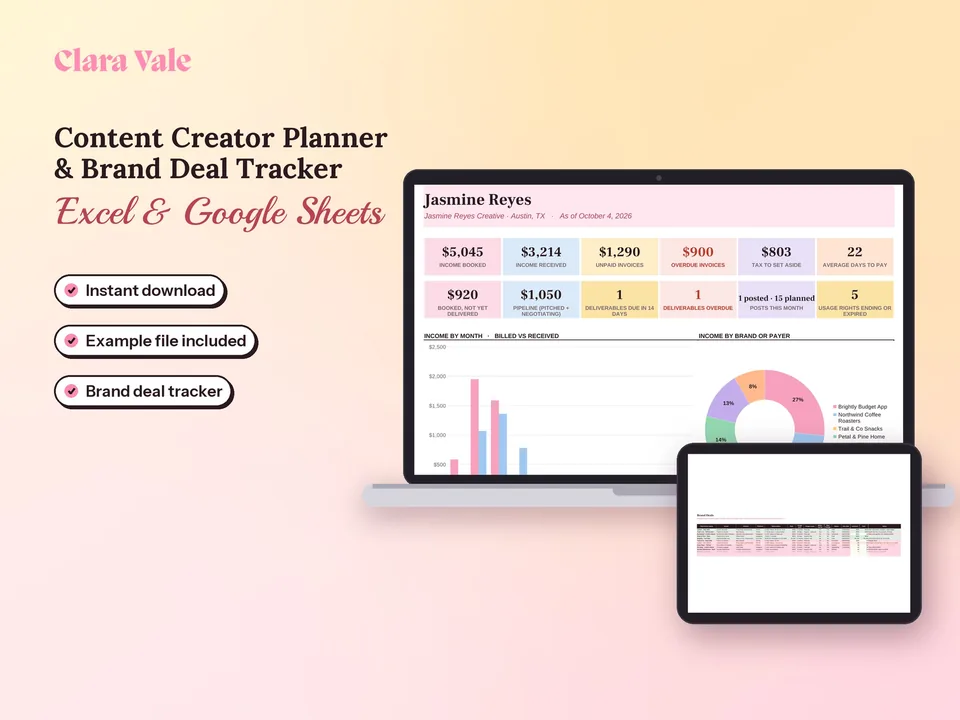
So, what is UGC? It’s content made by people outside the brand rather than by the brand itself, and in 2026 that covers both customers posting for free and creators paid to make the same kind of video. If you’re on the creator side, the paid version is a small freelance business: a base fee for your time, add-ons for usage and whitelisting, and a contract that says who can use what. Our Content Creator Planner & Brand Deal Tracker keeps those deals, usage terms and invoices in one sheet.
Questions people ask
What does UGC mean in social media?
On social media, UGC means user-generated content: posts, videos, photos, reviews and comments about a brand made by people outside the brand rather than by the brand itself. It can be a customer's unprompted TikTok, or a video a brand paid a creator to make in that same casual style and then posted or ran as an ad.
What is UGC with an example?
A customer films a 20-second video of a new water bottle surviving a drop on concrete and posts it to Instagram. That's organic UGC. If the brand then pays a creator to film a similar drop test, with a hook, captions and a vertical 9:16 cut for ads, that's paid UGC. Both look like a real person talking, not a commercial.
What does UGC do?
UGC shows a product in a real person's hands, in a real setting, which answers the questions a shopper has before buying: how big is it, how does it look on, does it work. On social feeds it blends in with what people already watch, so it tends to get watched rather than skipped. Brands use it on product pages, social accounts and paid ads.
Is UGC still a thing in 2026?
Yes. Brands still post customer content and still hire creators to make videos for TikTok, Instagram and Facebook ads. What has changed is the tooling: Meta now lets brands run ads from a creator's own handle through partnership ads, and rate guides like Billo's June 2026 update still publish per-video pricing for UGC creators.
Is UGC content legal?
Yes, if the rights and disclosures are handled. A brand needs permission or a license to reuse content it didn't make, because copyright belongs to whoever created it. Paid creators posting on their own accounts must disclose the brand relationship under FTC guidance, and fake reviews or testimonials from people who never used the product are banned by the FTC's 2024 rule.
What is UGC as a job?
As a job, UGC means being a UGC creator: a freelancer brands hire to make short product videos and photos that look like customer content. You're paid per video or per package, plus extra for usage rights, paid ads or raw footage. You don't need followers, because the brand posts the content on its own channels or ads.
What is an UGC creator vs influencer?
An influencer is paid mainly for reach: the brand buys a post in front of their audience, on their account. A UGC creator is paid for the content itself: the brand gets the video and posts it on its own page or in ads. Influencer fees scale with followers and engagement; UGC fees scale with skill, volume and usage rights.
Do I have to show my face to be an UGC creator?
No. Plenty of UGC is faceless: hands applying a product, a voiceover over close-ups, unboxings, screen recordings for apps, or point-of-view shots. Some briefs do ask for a person on camera, especially testimonials, so faceless creators may see fewer offers. Product demos, kitchen gadgets, beauty application and tech often work well without a face.