
Food cost means two different numbers in a kitchen. One is what a single plate costs to make. The other is what share of a month’s food sales went to ingredients. Owners mix them up all the time, and the fix is simple once you see them side by side. Below, we work out how to calculate food cost both ways with real numbers: a six-ingredient grain bowl and one month of inventory counts. Then we turn the plate cost into a menu price.
To calculate food cost per plate, add the cost of every ingredient in a recipe (adjusted for trim and cooking loss) and divide by the number of servings. To calculate food cost percentage for a period, take beginning inventory plus purchases minus ending inventory, then divide by food sales for the same period.
How to calculate food cost: the two formulas
Here’s how to calculate food cost in both senses. The first formula works on one recipe. The second works on the whole business over a week or a month.
| What you want | Formula | Use it for |
|---|---|---|
| Plate cost (cost per serving) | Total recipe cost ÷ servings the recipe yields | Pricing a dish, comparing dishes |
| Plate food cost % | Plate cost ÷ menu price | Checking if one dish is priced right |
| Cost of goods sold (COGS) | Beginning inventory + purchases − ending inventory | Measuring what you actually used |
| Period food cost percentage | COGS ÷ food sales | Tracking the whole kitchen month to month |
The plate cost is a forecast: it tells you what a dish should cost if everyone follows the recipe. The period food cost percentage is the result: it tells you what food did cost, waste and all. You need both, and the gap between them is where the money goes missing.
Step 1: Cost each ingredient at the amount you actually use
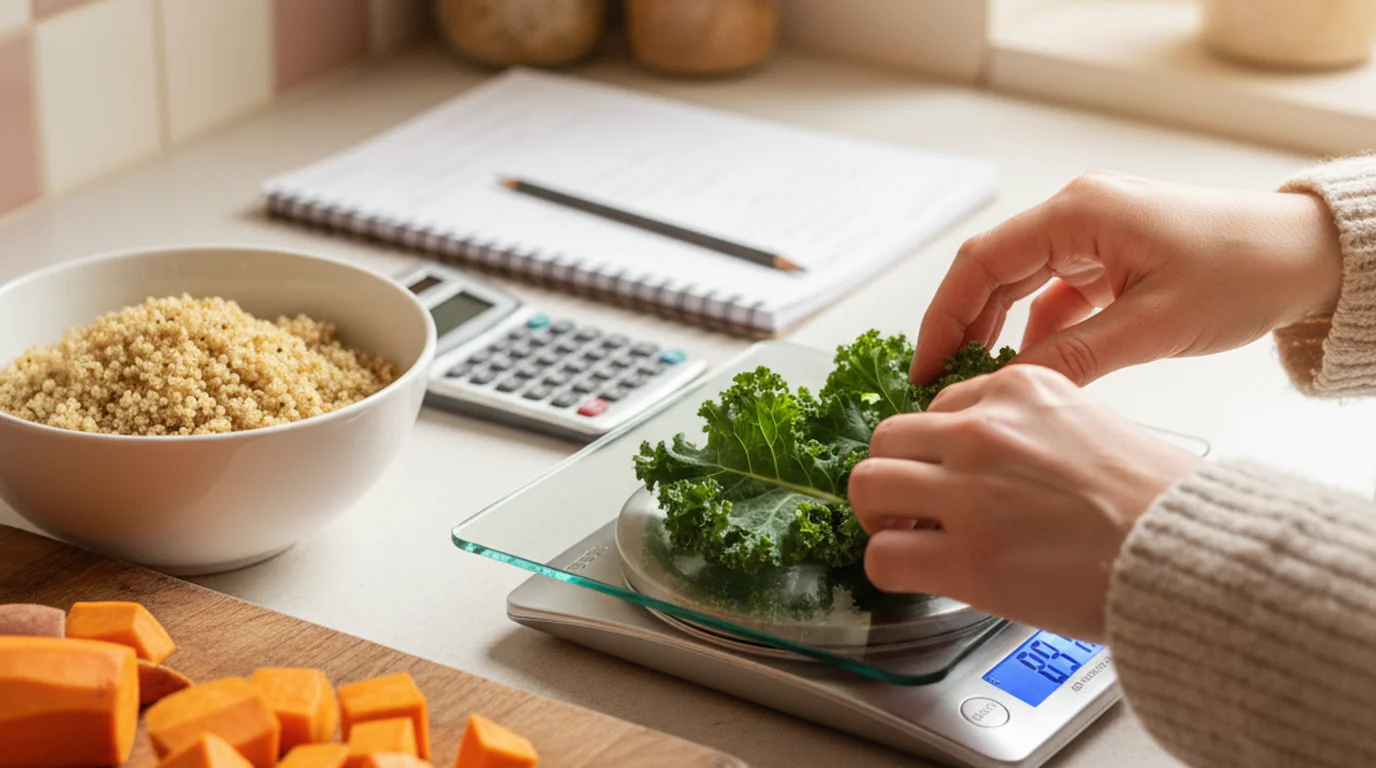
When you calculate food cost for a recipe, the errors start at the ingredient level. You buy kale by the pound, but you strip the stems and throw them out. You buy chicken thighs and trim the fat. The recipe calls for the trimmed amount, so the price you use has to be the price of the trimmed amount.
That’s what yield percentage does. Yield is the share of what you buy that ends up in the dish. If 1 lb of kale gives you 0.7 lb of leaves, the yield is 70%. The formula is:
Cost per usable unit = purchase price per unit ÷ yield %
So kale bought at $2.80/lb with a 70% yield really costs $4.00 per usable pound ($2.80 ÷ 0.70). Measure your own yields: weigh a case before and after prep a couple of times and use the average. Yields change with suppliers, seasons and who’s on the prep station.
Other things that belong in the ingredient cost: the price on your latest invoice (not last year’s), delivery charges if your supplier bills them per case, and small items like oil, salt and spices. Some kitchens cost those individually; others add a small flat amount per plate. Either works if you’re consistent.
Step 2: Add up the recipe and divide by servings
Here’s a worked example for a chicken and sweet potato grain bowl. The batch makes 10 bowls.
| Ingredient | Recipe uses | Purchase price | Yield | Cost per usable lb | Line cost |
|---|---|---|---|---|---|
| Chicken thighs, trimmed | 4 lb | $3.20/lb | 90% | $3.556 | $14.22 |
| Quinoa, dry | 2 lb | $4.50/lb | 100% | $4.50 | $9.00 |
| Sweet potatoes, peeled | 3 lb | $1.30/lb | 80% | $1.625 | $4.88 |
| Kale, stemmed | 1.5 lb | $2.80/lb | 70% | $4.00 | $6.00 |
| Feta | 1 lb | $7.60/lb | 100% | $7.60 | $7.60 |
| Tahini (for dressing) | 0.75 lb | $8.00/lb | 100% | $8.00 | $6.00 |
| Total recipe cost | $47.70 |
Plate cost: $47.70 ÷ 10 bowls = $4.77 per bowl.
Now run the same recipe without the yield column, pricing everything at the purchase price. The total drops to $43.50, or $4.35 per bowl. In our worked example, skipping yield understated the recipe cost by 9.7% ($4.20 on $43.50), and it only took three trimmed ingredients to get there. That’s the most common reason a dish that looks profitable on paper isn’t.
A recipe cost calculator does the per-ingredient math for you: package price ÷ package size × amount used, plus an allowance for small extras and waste, divided by servings. For trimmed items, enter the amount you buy rather than the amount that lands in the bowl (1.5 lb of stemmed kale at a 70% yield means about 2.14 lb bought). If a dish goes out in a container or with a side, add those to the plate cost too, since they leave the kitchen with the food.
Step 3: Calculate food cost percentage for a month
The plate cost tells you what should happen. The period number tells you what did. To calculate food cost for a month, you count inventory at the start and end of the period and track every food purchase in between.
Here’s one month for a small café:
| Line | Amount |
|---|---|
| Beginning inventory (Oct 1 count) | $6,200 |
| + Food purchases in October | $18,450 |
| − Ending inventory (Oct 31 count) | $5,900 |
| = Cost of goods sold (food) | $18,750 |
| Food sales in October | $58,600 |
| Food cost percentage | 32.0% ($18,750 ÷ $58,600) |
The logic: whatever you had on the shelf at the start, plus what you bought, minus what’s still on the shelf at the end, must have been used. Used means sold, wasted, spoiled, eaten by staff, comped or walked out the back door. The formula can’t tell those apart, which is exactly why it’s useful.
Gordon Food Service’s guide to how to calculate food cost for your restaurant uses the same formula: beginning inventory plus purchased inventory minus ending inventory equals COGS, and COGS divided by total food sales equals the food cost percentage. The method only works if both counts happen at the same point in the day and price items consistently.
A food cost calculator runs this formula each month and shows how many dollars you came in over or under your target, so the counts are the only work left.
How to price a dish from a target food cost percentage
Knowing how to calculate food cost per plate makes pricing one division:
Menu price = plate cost ÷ target food cost %
For the $4.77 grain bowl:
| Target food cost % | Price before rounding |
|---|---|
| 28% | $17.04 |
| 30% | $15.90 |
| 35% | $13.63 |
What target should you pick? Gordon Food Service says profitable restaurants usually land between 28% and 35% on food costs (source linked above). Treat that as a planning range, not a rule. The target is your choice, and it depends on your rent, your labor cost, your average check and the profit you need. A coffee-heavy café can run a lower food cost on drinks and carry a higher one on food. A place with high rent needs a lower target to leave room for it.
After you pick a price, round it and recheck. At $15.95, the bowl runs a 29.9% food cost ($4.77 ÷ $15.95). At $14.50, it runs 32.9%. Rounding is a pricing decision too, so make it on purpose. Our menu pricing calculator gives the price at your target, rounds it up to the next $0.25, and shows the food cost percentage at the price on your menu now.
Compare your actual food cost with your ideal food cost
This is the step most guides leave out, and it’s the one that finds money. Your ideal (or theoretical) food cost is what the month should have cost if every plate matched its recipe card: plate cost × number sold, added up across the menu, divided by food sales.
Say October’s menu mix gives an ideal food cost of 29.5%. On $58,600 of food sales, that’s $17,287 of food that should have been used. The actual COGS was $18,750. The gap is $1,463 in one month, or 2.5 percentage points.
A gap like that has a short list of causes:
- Portions drifting above the recipe card (an extra scoop of feta adds up fast)
- Waste and spoilage from over-prepping or poor rotation
- Staff meals and comps that aren’t recorded
- Invoice price increases that never made it into the recipe costs
- Counting errors, like a delivery that arrived after the closing count
A small gap is normal. A gap that grows month over month tells you where to look first. Because the ideal number comes from recipe cards, keep those cards current; the comparison is only as good as the plate costs behind it.
Mistakes that throw the number off
A few habits make food cost percentage look better or worse than it is:
- Mixing in beverages. Track food and drink separately. Coffee and soft drinks usually run a much lower cost percentage, and blending them hides a food problem.
- Using sales with tax included. Divide by net food sales, before sales tax and tips.
- Counting paper goods as food. Cups, lids and to-go boxes belong in their own line, unless you’ve deliberately put them in the plate cost.
- Inconsistent count timing. Count at the same point each period, before or after the day’s delivery, and stick to it.
- Stale prices. Value inventory at your most recent invoice cost so the count matches what you’re paying now.
When we built our café financial model, we set it to work at the level of average bill and food cost %, not dish by dish. That’s the right altitude for a business plan. Day to day, though, the dish-level plate cost is what you control, so you need both views.
Put your food cost numbers to work
That’s how to calculate food cost from start to finish: cost each ingredient at its usable yield, divide the recipe total by servings for a plate cost, divide plate cost by your target percentage for a price, and compare a monthly COGS-based food cost percentage against the ideal to spot leaks. Recheck plate costs whenever a supplier raises prices. If you’re planning a café or restaurant and want to see how your food cost percentage flows into profit, break-even and cash over 36 months, the Coffee Shop Business Plan & Financial Model builds it from your seats, menu prices and staff plan.
Questions people ask
How do you calculate 30% food cost?
Divide the plate cost by 0.30 to get the menu price that gives a 30% food cost. A dish that costs $4.77 to make needs a price of $15.90 ($4.77 ÷ 0.30). Dividing by 0.30 is the same as multiplying by about 3.33. To check an existing dish, divide its plate cost by its menu price.
How do I calculate the cost of food?
For one dish, cost each ingredient at the amount the recipe uses, adjusted for trim and cooking loss, add them up, and divide by the number of servings. For a whole month, take beginning inventory plus purchases minus ending inventory. That gives the cost of food you actually used.
How do I calculate the price of food?
Start from the plate cost and divide by the food cost percentage you're aiming for. At a 30% target, a $4.77 plate cost gives $15.90. Then round to a menu price, check what competitors charge, and recheck the percentage at the rounded price, since rounding moves it.
What is the formula for cost?
In a food business, the cost formula for a period is cost of goods sold = beginning inventory + purchases − ending inventory. Food cost percentage is that figure divided by food sales. For a single dish, cost per serving = total recipe cost ÷ number of servings the recipe yields.
How do you calculate the cost of a recipe?
List every ingredient with the quantity the recipe uses. Divide each purchase price by its yield percentage to get the cost of the usable amount, multiply by the quantity, and add the lines together. That's the recipe cost. Divide it by the number of portions for the cost per serving.
Is 30% a typical food cost?
It sits inside the range that Gordon Food Service gives for profitable restaurants, 28% to 35%. Treat that as a planning range rather than a rule. A café selling mostly coffee can run lower, and a steakhouse higher. The right target is the one your rent, labor and profit goal can carry.
Is the 32.8% food cost acceptable?
32.8% falls inside the 28% to 35% range Gordon Food Service cites for profitable restaurants, so it isn't a red flag on its own. Whether it's acceptable depends on your target and your other costs. Compare it with your ideal food cost from recipe cards; a wide gap points to waste or portioning.
How do I calculate the price per meal?
Work out the cost per serving first: total recipe cost divided by portions. Then divide that by your target food cost percentage. A grain bowl costing $4.77 per serving priced at a 30% target comes to $15.90. If you sell meal kits or catering, add packaging to the plate cost first.